
Skin in the game: how to build vertical AI that survives
Foundation models are eating software from both ends. Here are some notes on where the value actually lives, and how to build something that lasts.
Nearly $1 trillion was wiped from software and services stocks in a matter of weeks. FactSet dropped from a $20B peak to under $8B. Thomson Reuters shed almost half its market cap in a year. Anthropic, OpenAI, and Google are verticalizing fast. They are doing so not just building better models, but going after workflows directly.
Every founder building in a specific vertical is running the same thought experiment: what is my company actually for in a world where the infrastructure layer is becoming the product layer?
The answer exists. But it requires being honest about what you're building, who's paying for it, and which parts of your defensibility are real versus inherited from a world that's already gone. After spending a lot time reading, discussing and thinking about it, here are seven things I believe. Like our last post, see this as a playbook, a note to self that I hope to re-visit regularly on my own journey. Hopefully you find some value in it as well.
01. The margin expansion window is real, but temporary.
The services opportunity is genuinely large. Services is a $16 trillion global market. Software is $1 trillion. Professional services firms run at 30-40% margins on a good day. Software companies run at 70-85%. AI narrows that gap. Not by converting services firms into software companies, but by making services firms dramatically more leveraged per person. The margins improve. The ratio of people to output improves. That's a real and compelling opportunity.
But two things are true simultaneously. The window is real, but it's also dynamic: it's not a permanent state you capture once.
First, not all margin expansion is durable. As competitors adopt the same AI capabilities, services will re-commoditize on price. As JC Bahr-de Stefano points out, as clients realize AI is doing work they previously paid junior staff for, they'll demand those savings be passed through. The compression comes from both sides. The durable margin lives in the premium that sits on top of the automated output: the accountability layer, the liability layer, the relationship layer, not in the automation itself.
Second, a meaningful portion of the services market was never about output. Companies hire Big Four firms not because the audit is uniquely valuable, but because "we followed expert guidance" is a defensible position if something goes wrong. They bring in outside consultants to recommend layoffs so the decision isn't pinned on internal leadership. AI can replicate the output of that audit. It cannot do the blame-absorbing work. A board cannot point to a model and claim they relied on expert guidance. That portion of the market, the CYA layer, is more durable than it looks, and also structurally unavailable to pure-output AI products.
The implication: the right model isn't selling tools to professionals. It's doing the work yourself, capturing the margin directly, and expanding toward the judgement-heavy, insourced work as your system compounds data and trust. Sequoia's Julien Bek frames it cleanly: a copilot sells the tool, an autopilot sells the work. The work budget in any profession is six times the tool budget. Autopilots capture it from day one.
The best wedge is where outsourcing already exists, because if a task is already sent outside the company, three things are true: the company has accepted it can be done externally, there's an existing budget line that substitutes cleanly, and the buyer is already purchasing an outcome. Replacing an outsourcing contract with an AI-native provider is a vendor swap. Replacing headcount is a reorg. One is a six-month sales cycle. The other is a multi-year political process.

02. Close the loop. Own the outcome.
The companies that survive and compound in vertical AI are not the ones with the best model or the cleanest interface. They're the ones with skin in the game, the ones who own the outcome, not just the workflow layer in between.
There's a useful frame here from Nihar Bobba: think of last mile length as your primary strategic variable.
- Short last mile, like marketing copy, basic drafting, research copilots, is already being absorbed by foundation models.
- Medium last mile (contract analysis, workflow automation) is where most vertical AI companies have landed, and where Anthropic and OpenAI are now planting flags.
- Long last mile is where the structural defensibility lives: tax compliance with actual filing, audit-ready accounting, licensed professional services, cross-border regulatory coordination, healthcare under FDA and HIPAA requirements.
Real-world accountability. Real liability.
Three questions determine where you actually sit:
- Who is the principal? Are you a tool for someone else, or the entity responsible for the outcome?
- Who owns the liability? When something goes wrong, whose problem is it?
- Who holds the relationship? With regulators, auditors, authorities, who do they call?
If the answer to all three is your customer, you're a tool. Foundation model creep is a real strategic threat to your business. If the answer is you, you're building something that compounds rather than erodes.
Owning the outcome isn't one thing. It arrives through at least three distinct paths:
Unique insight and real-world coordination. Some companies own outcomes because they discovered a coordination layer nobody else had mapped. Outpost handles cross-border tax compliance for merchants: they don't calculate taxes, they coordinate filings across jurisdictions, face audits, and absorb the entire tax liability on behalf of customers. The moat isn't the technology. It's the discovery that owning the liability end-to-end was possible, and building the infrastructure to do it before anyone else.
Superior technical choices. Some companies own outcomes because they made architectural decisions that let them take on scope others shy away from. Monk manages complex billing and revenue across contract types with edge case handling and customer interaction depth that allows them to own outcomes that less technically precise products can't touch.
Deep entrenchment and behavioral change. Some companies own outcomes because they didn't just implement software: they changed how a team operates. Basis builds AI workers for accounting firms, but the real work is training accountants to trust AI workflows, owning the audit trail, and embedding into how firms function every day. The switching cost isn't the interface. It's the organizational muscle memory rebuilt around your product. Rillet is making a different bet in the same vertical: rather than embedding into existing firms, they're building the AI-native ERP that closes the books entirely, in zero days (their flagship promise). It's not a tool for accountants, but a replacement for the category of work. Same vertical, opposite product philosophy. Basis bets that the accounting firm survives but transforms. Rillet bets that the work gets absorbed into software that owns the outcome directly. Both are legitimate paths to a long last mile. Which is right depends on how quickly the institutional trust problem gets solved, and that's an empirical question, not a philosophical one.
The pricing consequence of owning outcomes is underappreciated. When you compete on output, you're priced on features and usage. When you own liability, you're priced on certainty. That converts cost-center pricing into something closer to insurance pricing. Tax calculation software is a commodity. The compliance platform that files on your behalf and faces audits is worth a premium that compounds every year you don't get a client audited. Foundation models can replicate output. They cannot replicate E&O coverage, regulatory credentialing, or the professional relationship clients are actually paying the premium for.

03. The gate is a moat.
Here's a concept I think is underexplored in the current discourse: not all processes are created equal. Some have mandatory staging gates: checkpoints that are legally required, contractually enforced, or institutionally non-negotiable. They cannot be skipped, automated away, or disintermediated regardless of how capable the underlying model becomes.
A tax return must be signed by a licensed CPA before it's filed. A drug must pass each phase of FDA review before the next phase begins. An audit opinion must be issued by a credentialed firm. A mortgage must close with a licensed professional certifying compliance. An insurance policy must be bound by a licensed broker. These aren't process inefficiencies waiting to be removed. They're structural features of how accountability works in regulated industries. The gate exists because someone needs to be legally responsible for what happens next.
If your product sits at the gate, i.e. if you are the entity that signs, certifies, issues, or approves, you own a position that no amount of model improvement can displace. The gate is the moat.
This is different from owning a workflow. Workflows can be automated, rerouted, or replaced. Gates cannot. A better model might do 95% of the work leading up to the gate faster and more accurately than before. That makes whoever owns the gate more valuable, not less, because the volume of work flowing through the gate increases while the number of credentialed entities who can sign off on it stays constrained.
The practical implication for product design: map the mandatory gates in your vertical before you map the workflows. Ask where the process has legally or contractually enforced handoffs that require a credentialed principal. Then ask whether your product can own that position. Not sit adjacent to it, own it.
Consider the difference between a legal AI tool that helps a lawyer draft a brief (useful, exposed) versus an AI-native legal service that owns the malpractice (durable). The lawyer is the gate. The tool has no skin in the game. The service is the gate. Everything upstream becomes faster and cheaper with better models; the gate gets more valuable.
The same logic applies in less obvious verticals. In construction, a building permit requires a licensed engineer to stamp drawings; that's a gate. In healthcare, a prescription requires a licensed clinician to authorize; that's a gate. In financial services, a securities trade requires a licensed broker-dealer; that's a gate. In insurance, a policy requires a licensed carrier to bind; that's a gate.
The companies that will look obvious in retrospect are the ones that identified the gate in their vertical, built the credentialing and compliance infrastructure to own it, and then used AI to accelerate everything upstream. The gate is non-negotiable. The work before the gate is increasingly automated. The entity at the gate captures both the trust premium and the efficiency gain.
One important nuance: mandatory gates aren't just regulatory. Some are institutional, i.e. not legally required, but socially enforced in ways that are equally durable. The Big Four audit is not legally mandated in most cases, but a Fortune 500 board that skips it has no cover if something goes wrong. The gate is real even when it isn't written into a statute. Map both kinds.

04. The value of getting entrenched.
Nicolas Bustamante has spent a decade on both sides of this. First building the vertical software LLMs are now threatening at Doctrine, then building the kind that does the threatening at Fintool. His breakdown of what LLMs do to each of the ten traditional moats of vertical software is the most useful diagnostic I've found.
Here is the honest summary.
Gone are:
-
Learned interfaces. A decade of muscle memory built around function codes and keyboard shortcuts evaporates when the interface is a natural language conversation. The switching cost that justified $25K per seat dissolves. As Bustamante notes, "LLMs collapse all proprietary interfaces into one chat."
-
Custom workflows and business logic. What took years of domain expert interviews and careful engineering (thousands of if/then branches, validation rules, compliance logic) can now be encoded in a markdown file by a domain expert who has never written code. Years of engineering versus one week of writing.
-
Public data access. Making public information structured and queryable was a genuine service. It no longer requires specialized engineering. Frontier models already know how to navigate a 10-K, parse a nested table, reconcile GAAP and non-GAAP. The scaffolding that took decades to build is now a commodity capability baked into the model.
-
Talent scarcity as a barrier. The bottleneck used to be finding people who understood both the domain and the technology. That bottleneck is gone. Domain experts can now encode methodology directly. The barrier to entry collapses.
-
Bundling. The agent is the bundle now. Alerts, watchlists, screening... These are prompts, not modules. When the integration layer moves to the AI, the premium for an all-in-one platform evaporates (more on this later).
Holding, for now:
-
Proprietary data. If your data cannot be replicated, licensed, or synthesized elsewhere, LLMs make it more valuable, not less. In an agent world, proprietary data is the scarce input everything competes to access. Bloomberg's real-time pricing from trading desks can't be scraped. S&P's credit ratings are opinions backed by a regulated methodology and decades of default history. An LLM can't issue a credit rating. The test: can someone else get it? If yes, exposed. If no, your pricing power may actually increase.
-
Regulatory and compliance lock-in. HIPAA doesn't care about GPT-5. FDA certification doesn't get easier because a new model dropped. In healthcare EHR, life sciences, and financial compliance reporting, the switching cost is implementation cycles, certification requirements, and patient or regulatory safety risk. LLMs are barely relevant to this equation in the medium term.
-
Network effects. When every counterparty uses the same platform for communication, you use it too. Not because of features, because of the network. This applies to agent-to-agent communication layers now as much as person-to-person ones. The network effects of shared tooling create a shared language that is powerfully self-reinforcing and that better models don't dissolve.
-
Transaction embedding. If your software processes payments, originates loans, or settles anything, an LLM sits on top of you as a better interface. The rails stay essential.
The diagnostic: ask three questions about any vertical software business. Is the data proprietary? Is there regulatory lock-in? Is the software embedded in the transaction? Three yes answers and you're probably fine. Zero and you're in serious trouble. The repricing in public markets is largely correct: companies whose moats were interface-driven are getting hit hardest, and they should be.
05. UX is dead. Domain expertise is the new product.
The shift in what it means to build software for a vertical is as significant as any of the moat changes above, and it's still underappreciated.
The old model: hire engineers who understand the domain (rare, expensive, slow to onboard), spend months encoding business logic in code, build a UI, train customers to use it, staff a CSM function to manage the interface change management every time you update. The interface was the product. Maintaining it was a major cost center.
The new model: domain experts encode their methodology directly, in plain language, which can be
encoded as simply as a SKILLS.md file, and the model executes it. No Python. No APIs. No UI to
maintain. No CSM army teaching keyboard shortcuts. The chat interface absorbs all of that
scaffolding.
This changes what product design actually means. Your job as a product designer is no longer to build an interface people learn. It's to absorb, condense, and operationalize domain expertise, to take the 40-page template one team uses and the shared spreadsheet the team down the hall uses and encode both of them accurately enough that the system behaves correctly for each. Flat, readable, auditable, updateable. Skills files, not codebases.
The talent implication is the inverse of what people expect. Talent scarcity doesn't go away, it inverts. The scarce resource is no longer the engineer who understands the domain. It's the domain expert who understands the process well enough to encode it precisely. The 10x accountant, the 10x underwriter, the 10x compliance officer, the person who has done 500 of these and can articulate exactly how they think, becomes dramatically more valuable because they can now translate directly into software without an engineering intermediary.
This also makes software fractal in a way it never was before. The same product can operate at company-wide, team-wide, and individual levels simultaneously. Each runs slighlty different variations of the same underlying model, because the customization layer is encoded in language rather than hardcoded in a codebase. An institution has a standard process. A team has a variant. An MD has preferences. All of these can coexist inside the same product. The institutional knowledge that George Sivulka describes, the 10% that is idiosyncratic to a specific team's way of working, where deals get done and careers are made, can now be encoded and preserved in ways that compound over time rather than living exclusively in people's heads.

06. The great unbundling.
The incentive to bundle many products into one to build a moat is gone, but something more interesting is replacing it.
The old bundle logic: keep customers by making them dependent on your entire ecosystem. Bloomberg started with market data, then added messaging, news, analytics, trading, compliance. Each module added switching costs because customers had built workflows around the whole stack. S&P Global's $44B acquisition of IHS Markit was exactly this strategy.
The new reality: when the integration layer moves from the software vendor to the AI agent, the incentive to buy a bundle evaporates. The agent is the bundle. An alert is a prompt. A watchlist is a prompt. Portfolio screening is a prompt. The agent orchestrates across specialized tools in a single workflow (pulling data from one source, running analytics through another, compiling results) and the user never knows or cares which providers were queried. The agent owns the customer relationship. The software vendors become suppliers competing on price to feed the platform.
This is aggregation theory in real time. The aggregator, i.e. the agent, captures the user relationship and the margin. The suppliers compete to be routed to. If your moat was that customers paid your premium to access a bundle of capabilities they now get from an orchestrating agent, your pricing power is structurally under pressure.
The companies that survive this transition are the ones that move from supplying capabilities to owning the agent itself. This means owning the workflow, the data, and the outcome, not just one component of it. The agent that knows your process, holds your history, and coordinates your regulatory relationships is not a commodity tool. It's load-bearing infrastructure. It's also slowly replacing your system-of-record.
Intelligence versus judgement matters here for how you sequence the build. Intelligence is rules-based work: complex rules, perhaps, but rules. Parsing, coding, screening, drafting against a spec. This is where automation wins earliest and most completely. Judgement requires experience and taste built over years: knowing which risk matters, when a contract clause is genuinely dangerous versus standard, how to structure a recommendation when the data points in multiple directions. The frontier shifts over time as AI systems accumulate proprietary data on what good judgement looks like in a domain. Copilots and autopilots converge. The autopilots being built now are accumulating the data advantage that will let them handle more of the judgement layer over time. The copilots that don't make that move will be replaced.

07. The death and re-birth of the services play
After years of taboo, are services companies sexy again? Are they venture scale?
Not software companies that happen to serve a vertical. Not AI tools that make existing professionals more productive. Actual firms, entities that employ credentialed professionals, carry liability, hold regulatory relationships, and deliver outcomes, but with a radically different ratio of humans to output underneath.
The logic follows from everything above. If the gate is the moat, and the gate requires a licensed principal, and AI can accelerate everything upstream of the gate dramatically, then the winning entity is not a software company at all. It's a firm that uses software as its leverage layer rather than its product. An accounting firm that closes books for 10x the clients per CPA. An insurance brokerage that binds policies with a fraction of the human overhead. A legal entity that owns malpractice on work that AI drafts and a lawyer reviews in minutes rather than hours.
These are services businesses. The margins are not software margins. But in a $16 trillion market, you don't need software margins to build something massive, and the margins are structurally better than the incumbent services firms they're replacing, because the leverage per credentialed professional is an order of magnitude higher.
This also reframes the copilot-to-autopilot transition in an interesting way. The question isn't just whether AI takes over the work. It's who the AI works for. Copilots work for the professional who retains the relationship, the liability, the billing. Autopilots work for the firm, who retains the relationship, the liability, the billing, and happens to deploy AI to do the work. The same technology, entirely different business structure and value capture.
What makes this hard is the trust problem. A Fortune 500 doesn't hand audit work to an unknown firm, however capable. The credentialing and brand equity that incumbents have built over decades is real, and it doesn't transfer automatically to an AI-native entity. This is why the most successful AI-native service firms are likely to follow one of two paths: either they build credentialing from scratch in categories where the incumbents are genuinely broken (accounting, where the talent shortage is structural; claims adjusting, where the adjuster workforce is aging out), or they acquire the credentialing by taking over existing practices and transforming them from the inside.
Rillet is betting on the first path in accounting: building the infrastructure to own the outcome directly before the incumbents figure out how to match them. Meroka is betting on the second in primary care: acquiring independent physician practices, transitioning them to employee ownership, and building AI as the management layer. Both are building firms, not tools. And both are betting that the gate, the licensed professional who certifies the outcome, is worth more, not less, as AI does more of the work upstream.
The categories where incumbents are genuinely broken are worth naming, because structural dysfunction is a forcing function that makes adoption urgent rather than optional.
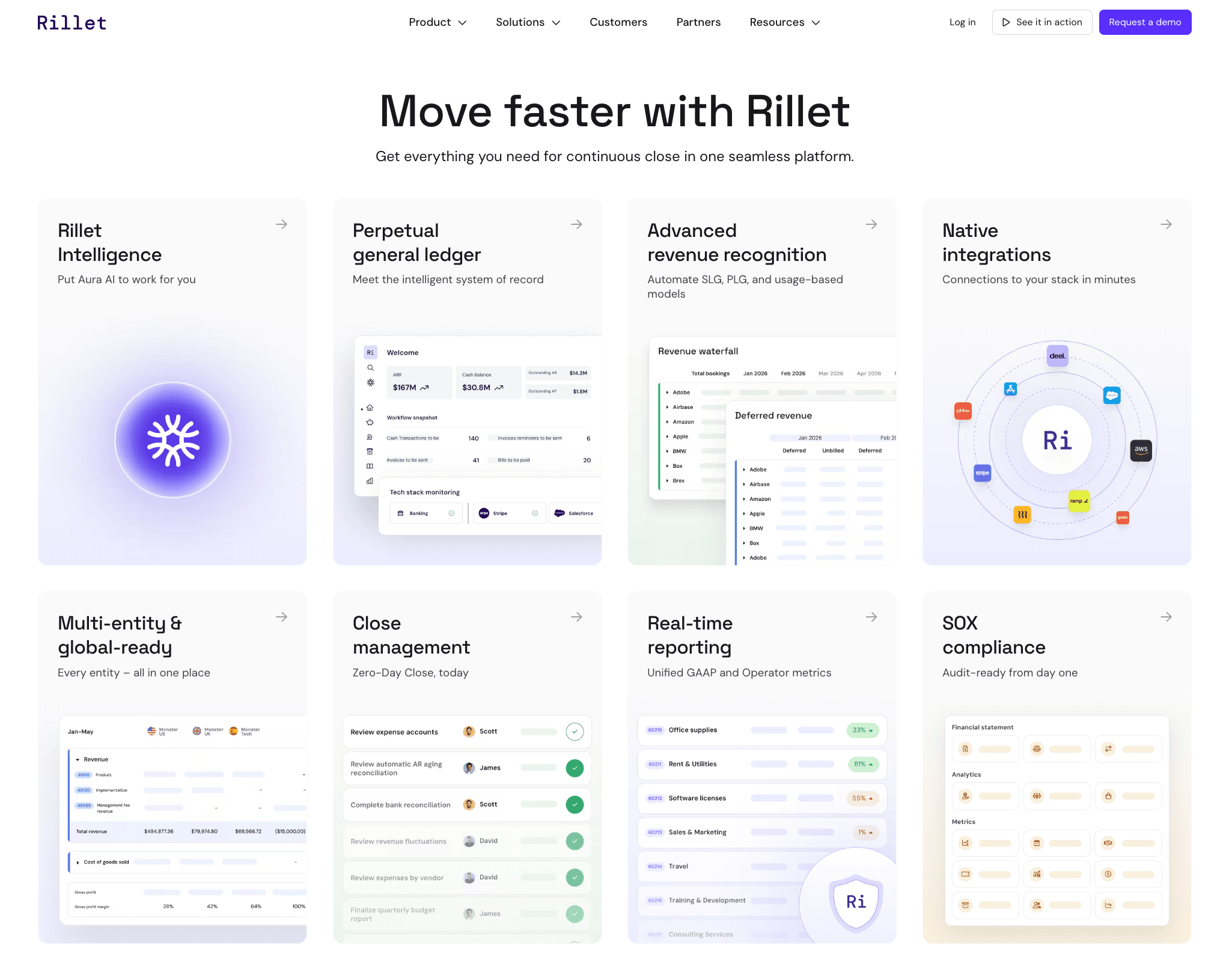
Accounting ($50-80B outsourced in the US alone) is the clearest case: 75% of CPAs are nearing retirement, the licensing pipeline is years long, and firms are already turning away work. The shortage is structural, not cyclical, which is why both Rillet (building the AI-native ERP to close the books entirely) and Basis (embedding into existing firms and owning the audit trail) can coexist as bets on the same broken market.
Insurance brokerage ($140-200B) and claims adjusting ($50-80B) face similar workforce dynamics, with the added advantage of extreme fragmentation, tens of thousands of small operators running identical processes, no single incumbent controlling the customer relationship, and massive outsourcing already in place. Tax advisory ($30-35B), IT managed services ($100B+), and supply chain procurement ($200B+) share a common trait: the overwhelming majority of the work is pure intelligence, already outsourced, with outcome-oriented buyers and existing budget lines ready to be substituted. Management consulting ($300-400B) is the largest and hardest (mostly judgement, which makes full automation premature) but the more interesting question is whether AI disaggregates it into intelligence components (data gathering, benchmarking) and judgement components (the recommendation, the room read), with the former automated and the latter becoming more expensive. The firm that owns both captures the margin expansion that incumbents are currently defending against.
A European view
Interestingly, I believe this opportunity is arguably more pronounced in Europe than anywhere else. European businesses have historically relied on external consulting and professional services at rates that dwarf US equivalents. The institutional preference for outside expertise, the relative shyness to build things internally, and the regulatory complexity across jurisdictions all point in the same direction. At the same time, European enterprises have been slower to adopt new software tools, which has left the services layer thick, expensive, and largely untouched. For a founder building an AI-native services firm in Europe, that isn't a headwind, it's the market. The outsourcing contracts already exist. The buyers are already outcome-oriented. And the regulatory fragmentation across EU member states, which makes cross-border compliance genuinely hard, is exactly the kind of complexity that creates mandatory gates worth owning.
The historical analogy that keeps coming to mind: the emergence of the Big Four wasn't inevitable. It was the result of a particular moment: the rise of public capital markets, new regulatory requirements, and the need for independent certification, where a new kind of professional services firm crystallized around a structural need. We may be in a similar moment. The regulatory requirements aren't going away. The certification needs aren't going away. But the firms that own the certification are about to look very different.
The ones that survive won't be the old firms that adopted AI. They'll be new entities that were born around AI and built the credentialing on top of it. That's skin in the game.
The companies that look obvious in five years will be the ones that found the gate in their vertical, built the credentialing to own it, and used AI to accelerate everything upstream. The gate is non-negotiable. The work before it is increasingly automated. The entity at the gate captures both the trust premium and the efficiency gain.
That's what skin in the game actually means.
Many of the thoughts above were synthesized from the great essays of:
- JC Bahr-de Stefano, Services Won't Become Software (BTV)
- Nihar Bobba, Will Vertical AI Survive? (BTV)
- George Sivulka, In Defense of Vertical Software
- Nicolas Bustamante, 10 Years Building Vertical Software
- Julien Bek, Services: The New Software (Sequoia Capital, March 2026)
Also many thanks to everyone who's taken the time to discuss these topics with me and informed my views, including among many others: Jason Chen, Andreas Schwarzenbrunner, Kelley Mak, Hugo Renaudin, Antoine de Mereuil, Darragh Collins, Varun Sridhar.